


5 Things You Need to Know Before Filing for Divorce in California
- D G
- Jul 3, 2025
- 7 min read


Filing for divorce in California is more than just paperwork—it’s a legal process that affects your finances, your children, and your future. Whether you’ve made the decision to file or you’re still weighing your options, understanding the key legal and procedural requirements will help you avoid costly mistakes. In this guide, we break down five critical things you need to know before initiating a California divorce case.
📌 Ready to file? Start your divorce documents here.
1. You Must Meet California’s Residency Requirements
Before you can file for divorce in California, you must meet the state’s residency requirements under Family Code § 2320:
You or your spouse must have lived in California for at least 6 months, and
In the county where you plan to file for at least 3 months
If you don’t meet these requirements yet, you can still file for legal separation, then amend to divorce later once you meet the timeframe.
Important: Residency is based on physical presence, not your mailing address or voter registration. If you recently moved counties, wait until you meet the 3-month local requirement.
2. California Is a No-Fault State
California is strictly a no-fault divorce state. That means you don’t need to prove adultery, abandonment, abuse, or other misconduct to file. The only legal grounds are:
Irreconcilable differences, or
Permanent legal incapacity to make decisions (rare)
Judges don’t consider who was “at fault” when dividing property or awarding support, so keep the focus on the legal issues rather than the emotional ones.
That said, behavior can still matter in certain contexts—such as domestic violence, which can impact spousal support (see Family Code § 4320(i)) and custody.
📖 Learn more: Divorce Basics on FindLaw
3. California Is a Community Property State
In California, property acquired during the marriage is considered community property and is generally divided 50/50 unless the parties agree otherwise.
This includes:
Wages earned during the marriage
Real estate purchased during marriage
Retirement contributions made during marriage
Debts incurred for marital purposes
Property owned before marriage, or acquired by gift or inheritance, is typically considered separate property, but the lines can blur.
One common trap: commingling. For example, if you used your inheritance to pay down the mortgage on the family home, that may require a Family Code § 2640 reimbursement.
Before filing, gather your financial documents:
Bank statements
Mortgage records
Retirement statements
Tax returns
Credit card debts
Prenups (if applicable)
You’ll be required to disclose these in your Preliminary Declaration of Disclosure, so get organized early.
4. Custody and Support Are Handled Separately from the Divorce Judgment
Divorce doesn’t mean everything is handled in one hearing. In fact, issues like custody, child support, and spousal support are often resolved before the actual divorce judgment is entered.
Here’s a breakdown:
Child custody is determined based on the child’s best interests, not parental preference. If there’s a dispute, the court may require mediation and may issue temporary orders.
Child support is based on a statewide guideline formula under Family Code § 4055, considering income and custodial time.
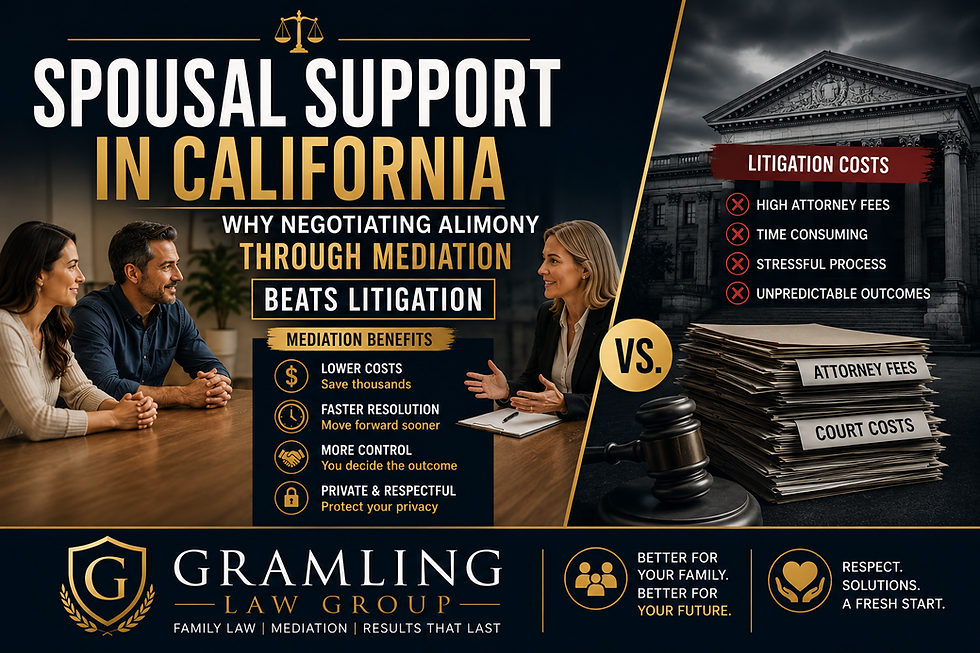
Spousal support (temporary or permanent) is governed by factors under Family Code § 4320, including length of marriage, need, and ability to pay.
You can request these orders at any time after filing by submitting a Request for Order (FL-300). These issues often require multiple court dates and may be resolved via stipulation, mediation, or trial.
🔗 Need help with RFOs or support motions? Start here.
5. There Is a Mandatory 6-Month Waiting Period
Even if you and your spouse agree on all terms, California has a mandatory six-month waiting period from the date the petition is served before a divorce can be finalized.
This is the minimum—not a maximum. Many cases take longer due to:
Disputes over property or custody
Delays in exchanging disclosures
One party not responding or avoiding service
Needing a court date for a trial or default judgment
During this time, you can still get temporary orders, live separately, divide assets, or even enter into a Marital Settlement Agreement (MSA). But the status of your marriage cannot legally change until the waiting period ends.
If your judgment is entered after the six months, the court will reflect that in your date of termination. If it’s entered before, the court will post-date your divorce effective date to meet the 6-month rule.
Bonus: You Can File Without a Lawyer—but Be Careful
California allows parties to self-represent, and many choose to do so, especially in amicable or low-asset cases. That
You said:
stop doing sanctum legal links, do thegramlinglawgroup.com links
ChatGPT said:
Updated saved memory
Understood. Going forward, all blog post service and consultation links will use thegramlinglawgroup.com. Here's the revised article with correct branding and links:
5 Things You Need to Know Before Filing for Divorce in California
Filing for divorce in California is more than just paperwork—it’s a legal process that affects your finances, your children, and your future. Whether you’ve made the decision to file or you’re still weighing your options, understanding the key legal and procedural requirements will help you avoid costly mistakes. In this guide, we break down five critical things you need to know before initiating a California divorce case.
📌 Ready to file? Start your divorce with attorney-prepared documents now.
1. You Must Meet California’s Residency Requirements
Before you can file for divorce in California, you must meet the state’s residency requirements under Family Code § 2320:
You or your spouse must have lived in California for at least 6 months, and
In the county where you plan to file for at least 3 months
If you don’t meet these requirements yet, you can still file for legal separation, then amend to divorce later once you meet the timeframe.
Important: Residency is based on physical presence, not your mailing address or voter registration. If you recently moved counties, wait until you meet the 3-month local requirement.
2. California Is a No-Fault State
California is strictly a no-fault divorce state. That means you don’t need to prove adultery, abandonment, abuse, or other misconduct to file. The only legal grounds are:
Irreconcilable differences, or
Permanent legal incapacity to make decisions (rare and requires medical proof)
Because fault doesn’t matter, the court won’t award a better financial outcome to the "morally right" party. This often surprises people expecting the court to punish infidelity or dishonesty. Instead, judges focus on fair division of assets, custody, and support.
📖 Read more: No-Fault Divorce – FindLaw
3. California Is a Community Property State
Under Family Code §§ 760–761, California presumes that any property acquired during the marriage is community property, meaning it belongs equally to both spouses—regardless of who earned it or whose name is on the title.
This includes:
Income earned by either spouse during the marriage
Real property acquired after marriage
Vehicles, investments, retirement earned during marriage
Business profits unless clearly separate
Separate property (acquired before marriage or after separation) is not divided but must be clearly proven with documentation.
You’ll be required to disclose all assets, debts, and income as part of your preliminary declaration of disclosure (FL-140/FL-142/FL-150/FL-160). Failing to do so can result in serious penalties, including reopening of judgments and financial sanctions.
📌 Need help with disclosures? Let us assist.
4. Custody and Support Will Be Handled Separately
If you have children with your spouse, the divorce will also determine:
Legal custody (decision-making authority)
Physical custody (where the children live)
Child support (based on income and time share)
Spousal support (if requested)
California courts use a statewide formula for child support, governed by Family Code § 4055, and determine spousal support using factors listed in Family Code § 4320. These include the length of marriage, standard of living, earning capacity, and more.
Custody disputes are guided by Family Code § 3020, with the court’s primary concern being the “best interest of the child.” Judges will consider:
Which parent has been the primary caretaker
Each parent's ability to provide stability
Whether there are issues of domestic violence, substance abuse, or neglect
The court may order custody mediation and, if disputes continue, a child custody evaluation or evidentiary hearing.
5. Divorce Takes at Least Six Months to Finalize
California law imposes a mandatory 6-month waiting period from the date the respondent is served with the divorce petition. This means:
Even if you agree on everything, you cannot finalize your divorce faster than six months
The clock starts ticking only after proper service (not filing)
You can negotiate, file disclosures, and enter a stipulated judgment during that time, but the court will not restore your single status until the six months have passed. Many people are surprised by this built-in delay, especially if they are eager to remarry or separate finances.
Bonus Tip: You Can Set Temporary Orders Early
You don’t have to wait until the divorce is finalized to get help with child custody, visitation, support, or restraining orders. You can file a Request for Order (FL-300) at the same time you file for divorce (or anytime after) to ask the court to issue temporary orders.
These remain in effect until the court changes them, either at trial or by stipulated judgment.
📋 Need a temporary order fast? We’ll help you prepare and file the motion.
Final Thoughts
Filing for divorce in California requires more than just filling out forms. You need to understand how your property, custody rights, and financial obligations will be treated by the court. Start with a full picture of your legal standing, and avoid waiting too long to act—especially when children or property are involved.
If you’re ready to move forward, we can help. Whether you want legal representation or assistance with just the documents, our team at Gramling Law Group is here to guide you through the process with precision and care.
📞 Schedule a consultation with Gramling Law Group📋 Start your California divorce documents today


Comments